Yesterday Today and Tomorrow in English for Kids
Three words place an event on a timeline: the previous day is one step back, the present day is now, and the following day is one step ahead. Yesterday, Today, and Tomorrow in English: Words and Activities for Kids connects these points to events, sentences, and verb forms. Start with a calendar and three gestures. Ask one question per point, then have the child answer with a real event. Older children can add two days ago and place plans, routines, and past events.
📥 Yesterday, Today, and Tomorrow Practice
Time words, clear examples, activities, and a weekly tracker
Leave your email — we'll send the PDF to your inbox.No spam — the PDF plus one short reminder. Unsubscribe anytime.
Core Words and Phrases for Talking About Days
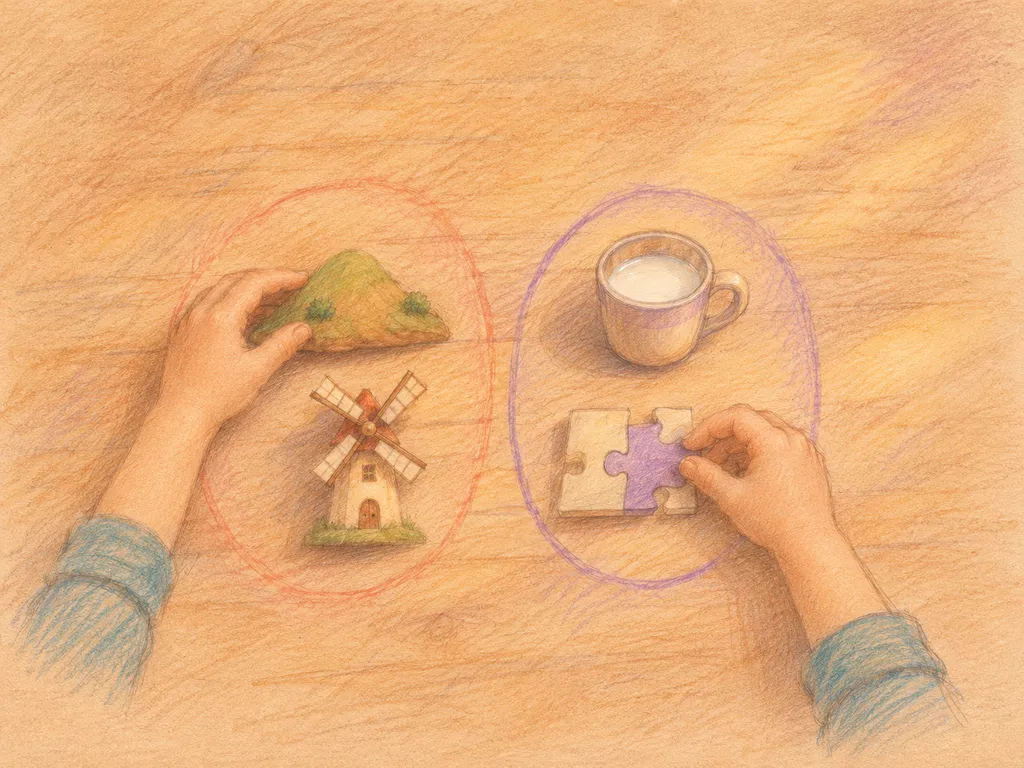
Start with one contrast: the past is finished, the present is happening, and the future has not happened. Point left for the past, down for the present, and right for the future. These movements guide learners who cannot yet read a calendar.
Use Yesterday, Today, and Tomorrow in English: Words and Activities for Kids as a gradual sequence. Teach the three core words before morning, afternoon, evening, or night. A child who places an event on the correct day can build a longer phrase.
Examples That Make Time Words Clear
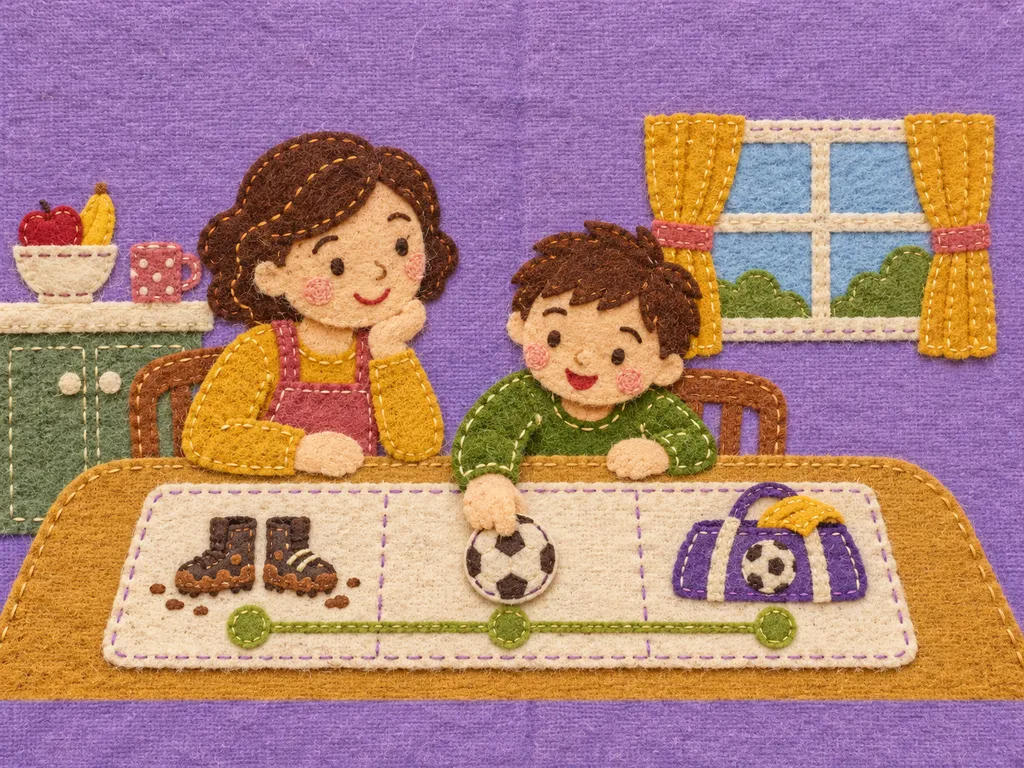
Connect each word to a familiar event. Say, “The day before, we went to the park,” “Today we are at home,” and “Tomorrow we will visit the library.” Use real or imaginable events. Meaning comes before grammar.
The examples in Yesterday, Today, and Tomorrow in English: Words and Activities for Kids work as a linked set. Keep one detail and change the day: “I played football the previous day. I am playing football today. I will play football tomorrow.” Repeating the activity highlights the time contrast.
Ask a question requiring the target word: “When did we make soup?” or “When will you call your cousin?” Accept a short answer. Then model the full sentence and have the child repeat it with a personal detail.
A quick teaching checklist
- Point to the correct day on a calendar.
- Say one complete model sentence.
- Ask the child to change one detail.
- Check that the time word matches the event.
- Return to the same sentence the next day.
Activities for Different Ages
For ages 4 to 6, use three picture cards. Place a familiar activity under each day word: sleeping under the past-day card, eating breakfast under today, and visiting a playground under tomorrow. Say each sentence together, mix the cards, and let the child restore the order.
For ages 7 to 9, make a three-column family calendar. The child draws or writes one event per column and describes it. When adapting Yesterday, Today, and Tomorrow in English: Words and Activities for Kids, keep the task short and request full sentences.
For ages 10 to 15, add a timeline, reasons, and plans. Compare “I studied yesterday,” “I am studying today,” and “I am going to study tomorrow.” Older learners can explain why “the next day” may replace “tomorrow” when retelling a past event.
Two corrections
Myth: Children must learn every verb tense before using day words.
Fact: They can begin with meaningful model sentences and study tense patterns step by step.
Myth: Mixing time words means a multilingual child is confused.
Fact: Mixing is a normal way to test how different language systems work.
Practice Ideas for Home and the Classroom
At breakfast or dinner, ask: “What did you do the day before?”, “What are you doing today?”, and “What will you do tomorrow?” Keep answers truthful and brief. Two minutes provides focused daily practice.
Use photos for support. Choose one from a previous day, one from today, and one connected to a future plan. In LearnLink lessons, our tutors use this sequence with objects, drawings, or actions suited to the learner’s age.
Three-day Sentence Challenge
Choose one verb, such as play, read, cook, or visit. Make a true sentence about the previous day, today, and tomorrow. Replace the verb and repeat. Check the day word and verb form.
Games provide repetition without a test. Hide three day cards around the room, read an event aloud, and ask the child to touch the matching card. For a harder round, the child gives the clue while the parent chooses.
Keep the reference point visible
Move a marker to the new “today” every morning so yesterday and tomorrow change with it.
Common Mistakes and Calm Corrections
Children may say “on yesterday” or “on tomorrow” because another language uses a preposition before day expressions. In standard English, these words usually stand alone: “We arrived the previous day,” not “We arrived on the previous day.” Model the correct sentence without treating language transfer as careless.
Another mix is “Yesterday I play” or “Tomorrow I played.” Repeat with a contrast: “Yesterday I played. Tomorrow I will play.” For young learners, one accurate model works better than a long account of tense rules.
Children may confuse tomorrow with the next day. Tomorrow is measured from the present day. The next day is measured from a day already mentioned: “On Monday we arrived. The next day, we visited the museum.” Draw two timeline points if words are insufficient.
Bringing These Words into Family Routines
Add day words to ordinary talk. At bedtime, choose one good thing from today and one plan for tomorrow. By the next evening, the plan is a past event. The shift shows that the reference point moves daily.
A multilingual family can use one calendar for each language. Let the child notice similarities and differences, but keep the English round in English. If another-language word appears, supply the English phrase and continue without interrupting the child’s message.
Review by changing the task instead of adding word lists. Speak on Monday, draw on Tuesday, sort cards on Wednesday, and write on Thursday. vocabulary stays stable through listening, speaking, reading, and writing.
- Name yesterday’s event, today’s plan, and tomorrow’s activity during breakfast.
- Ask your child to place three family pictures in time order.
- Read one familiar book and identify what happened yesterday, today, or tomorrow.
- Add yesterday, today, and tomorrow labels to the family calendar together.
- Revisit one bedtime memory and preview one simple activity for tomorrow.
When a word has several meanings or pronunciations, Cambridge Dictionary is a useful check before turning it into child-friendly examples.
Frequently Asked Questions
Which Word Should a Child Learn First?
Teach today first because it points to the child’s present experience. Add the previous day through a recent event, then introduce tomorrow through a planned event. After the three words are understood, order them on a calendar. The goal is to connect each word with a real point in time, not memorize definitions.
Should I Correct Every Tense Mistake?
Correct a mistake when it blocks the time meaning or keeps returning. Say the full sentence calmly and let your child retry. During lively conversation, respond to the message first and revisit one pattern later. Frequent interruptions can turn speaking into a grammar test.
Is It a Problem If a Multilingual Child Mixes Languages?
No. A multilingual child may borrow a familiar word while searching for its English equivalent. Supply the English time word in a complete sentence, then continue talking. Compare languages afterward if your child enjoys it. The aim is accurate time meaning followed by a usable English form.
How Often Should We Practice These Time Words?
Practice for a few minutes on most days instead of holding a long weekly session. A routine based on Yesterday, Today, and Tomorrow in English: Words and Activities for Kids fits breakfast, a journey, or bedtime. Change the events and verbs, but retain the three-day pattern until your child answers without a prompt.
Try this three-step routine for 7 days:
- Ask three time questions during one daily routine.
- Help your child answer each question with a complete sentence.
- At the end of the week, repeat the questions without pictures or gestures.
If your child needs steady speaking practice, start small — choose a trial lesson.
Stay updated on our latest tips and resources by following us on Instagram LearnLink.